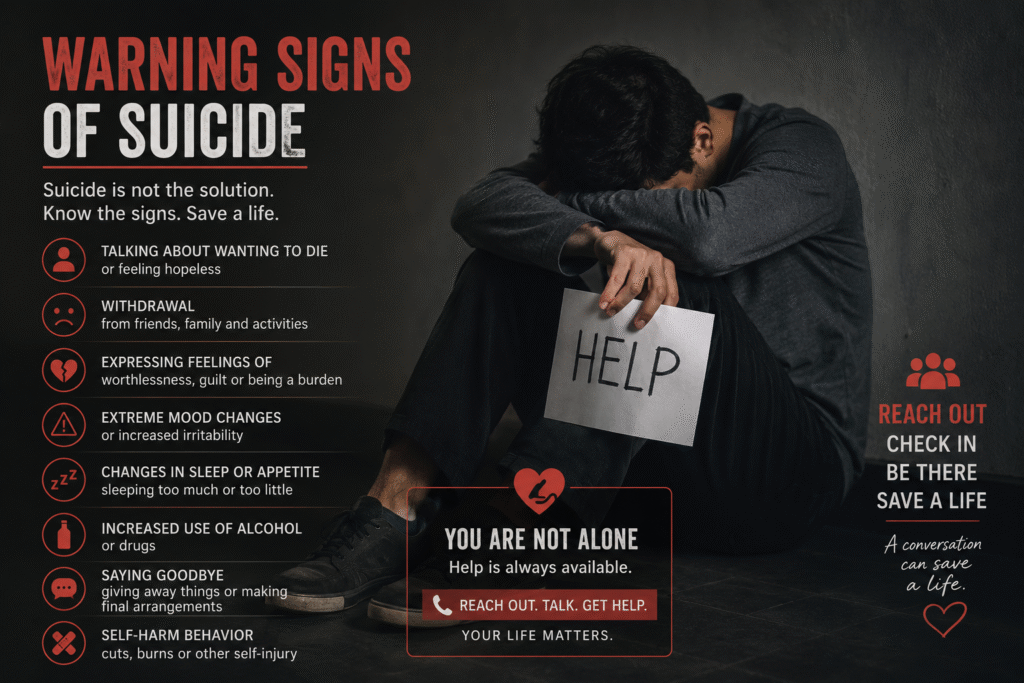
“I Never Thought They Were Struggling This Much…”
One of the most painful things families say after losing someone to suicide is:
“They looked normal.”
“They never told us.”
“We had no idea they were suffering.”
The truth is, many people experiencing suicidal thoughts do not openly say:
“I want to die.”
Instead, emotional pain often appears through subtle behavioral, emotional, and psychological warning signs.
And sometimes those signs are misunderstood as:
- mood swings
- laziness
- anger
- attention-seeking
- isolation
- “just stress”
But underneath, the person may be fighting a level of emotional pain they no longer know how to handle.
Understanding warning signs can help families, friends, teachers, partners, and colleagues recognize when someone may urgently need support.
Suicide Is Usually About Emotional Pain — Not “Weakness”
People experiencing suicidal thoughts are often not trying to “escape life.”
They are trying to escape:
- unbearable emotional pain
- hopelessness
- exhaustion
- shame
- loneliness
- trauma
- depression
- overwhelming stress
Many genuinely feel trapped.
And in that moment, their mind may begin believing:
“Things will never improve.”
This hopelessness is dangerous.
Because emotional pain can temporarily distort thinking.
Common Warning Signs of Suicide
1. Social Withdrawal
One of the earliest warning signs is emotional withdrawal.
The person may:
- stop replying to messages
- avoid calls
- isolate themselves
- lose interest in social interaction
- disappear from friend groups
- spend excessive time alone
Sometimes they quietly disconnect from people before attempting self-harm.
2. Talking About Hopelessness
Statements like:
- “Nothing matters anymore.”
- “Everyone would be better without me.”
- “I am tired of everything.”
- “There’s no point.”
- “I can’t do this anymore.”
should never be ignored.
Even if said jokingly.
3. Sudden Personality Changes
Families may notice:
- unusual silence
- irritability
- emotional numbness
- anger outbursts
- reckless behavior
- crying spells
- extreme mood swings
Sometimes a cheerful person suddenly becomes emotionally flat.
Or someone emotionally expressive becomes detached and distant.
4. Giving Away Possessions or Saying Goodbye
Some individuals begin:
- giving away meaningful belongings
- writing letters
- deleting accounts
- saying unusual goodbyes
- expressing gratitude suddenly
This can sometimes indicate emotional preparation.
5. Severe Depression or Emotional Numbness
Depression is one of the biggest risk factors.
But suicidal individuals do not always appear “sad.”
Some instead feel:
- emotionally empty
- disconnected
- exhausted
- numb
- hopeless
This silent depression often goes unnoticed.
6. Sudden Calmness After Severe Distress
One dangerous sign is when a severely distressed person suddenly appears unusually calm.
Sometimes this happens because they have internally decided to end their suffering.
Families may mistakenly think:
“They are finally improving.”
when the situation may actually be worsening.
7. Self-Harm Behaviors
Self-harm may include:
- cutting
- burning
- hitting oneself
- overdosing
- reckless substance use
Not all self-harm means suicidal intent.
But it always indicates emotional distress that needs attention.
8. Sleep & Appetite Changes
Severe emotional distress often affects:
- sleep
- eating patterns
- energy levels
- concentration
People may:
- stop sleeping properly
- oversleep constantly
- lose appetite
- binge eat
- appear physically exhausted
9. Feeling Like a Burden
Many suicidal individuals genuinely believe:
“People would be happier without me.”
This distorted belief becomes extremely dangerous.
Especially when combined with:
- isolation
- depression
- shame
- financial stress
- academic pressure
- relationship trauma
10. Increased Substance Use
Alcohol and drugs can worsen impulsivity and emotional instability.
Many people use substances to temporarily numb emotional pain.
But this may increase suicide risk further.
Warning Signs in Students & Young Adults
Young people today face enormous pressures:
- academic stress
- career anxiety
- social media comparison
- loneliness
- relationship trauma
- family expectations
- identity struggles
Warning signs in students may include:
- sudden drop in performance
- skipping classes
- hopelessness
- emotional outbursts
- burnout
- isolation
- loss of motivation
- excessive sleeping
- crying spells
- self-harm scars
Why People Often Hide Their Suicidal Thoughts
Many people fear:
- judgment
- hospitalization
- burdening others
- appearing weak
- disappointing family
So they silently continue functioning while suffering internally.
Some even smile normally in public.
This is why emotional check-ins matter deeply.
What NOT To Say
Avoid saying:
- “Others have bigger problems.”
- “You are overreacting.”
- “Be stronger.”
- “Don’t be dramatic.”
- “You just want attention.”
These responses increase emotional isolation.
What Actually Helps?
If someone appears suicidal:
- listen calmly
- take them seriously
- stay emotionally present
- encourage professional help
- avoid judgment
- reduce isolation
- involve trusted support systems
Sometimes simply feeling heard reduces immediate emotional danger.
Professional Help Matters
Suicidal thoughts are treatable.
Mental health professionals can help address:
- depression
- anxiety
- trauma
- hopelessness
- emotional dysregulation
- impulsivity
- substance use
- burnout
Early intervention can save lives.
Final Thoughts
Most people who are suicidal do not truly want life to end.
They want unbearable emotional pain to stop.
And often, the signs are visible —
but misunderstood.
So if someone around you has become:
- withdrawn
- hopeless
- emotionally numb
- unusually silent
- overwhelmed
- disconnected
please do not ignore it.
One conversation.
One supportive response.
One moment of emotional understanding.
can sometimes become the reason someone survives.
🌿
— Dr. Rameez Shaikh
Psychiatrist & Counsellor
+91-8208823738

Dr. Rameez Shaikh (MBBS, MD, MIPS) is a consultant Psychiatrist, Sexologist & Psychotherapist in Nagpur and works at Mind & Mood Clinic. He believes that science-based treatment, encompassing spiritual, physical, and mental health, will provide you with the long-lasting knowledge and tool to find happiness and wholeness again.
Dr. Rameez Shaikh, a dedicated psychiatrist , is a beacon of compassion and understanding in the realm of mental health. With a genuine passion for helping others, he combines his extensive knowledge and empathetic approach to create a supportive space for his patients.