
What Is Dementia?
Dementia is not one disease.
It is a group of conditions where the brain slowly loses its ability to:
- Remember
- Think clearly
- Communicate
- Make decisions
- Manage daily activities
Over time, dementia affects behavior, emotions, mobility, bladder control, and personality.
I often tell families in clinic:
“Dementia is not just memory loss. It slowly changes how a person experiences the world.”
How Common Is Dementia?
- Around 55 million people worldwide live with dementia
- In India, estimates range from 4–5 million, and rising
- Risk increases sharply after 60 years
- Women are slightly more affected (longer lifespan)
With longer life expectancy, every Indian family will encounter dementia—directly or indirectly.
Causes of Dementia
Common Causes
- Alzheimer’s disease (most common)
- Vascular dementia (after strokes, uncontrolled BP/diabetes)
- Lewy body dementia
- Frontotemporal dementia
- Parkinson’s disease dementia
Risk Factors
- Age
- Family history
- Diabetes, hypertension
- Smoking, alcohol
- Head injury
- Low cognitive stimulation
What Happens in the Brain?
Inside the brain:
- Nerve cells slowly degenerate and die
- Connections between brain cells break down
- Brain areas controlling memory, behavior, movement shrink
In Alzheimer’s:
- Abnormal protein deposits (plaques & tangles)
- Signal transmission becomes faulty
This damage is progressive and irreversible, but symptoms can be managed.
History & Progression: How Dementia Typically Starts
Early signs are often ignored:
- Repeating questions
- Forgetting recent events
- Misplacing things
- Subtle personality change
Families usually say:
“Doctor, earlier we thought it was normal ageing.”
It is not.
Symptoms of Dementia (Stage-Wise)
🧠 1. Cognitive Symptoms
- Memory loss (recent more than past)
- Forgetting names, faces
- Difficulty planning or managing money
- Confusion about date, place, time
🗣️ 2. Speech & Communication
- Word-finding difficulty
- Irrelevant or repetitive talk
- Talking about old memories as if happening now
- Talking to deceased relatives
I have seen patients clearly describe events from 40 years ago, but forget breakfast.
😟 3. Emotional & Behavioral Symptoms
- Fearfulness
- Suspiciousness
- Irritability
- Crying spells
- Restlessness in evenings (sundowning)
🚶 4. Physical & Mobility Problems
- Slowed walking
- Poor balance
- Slipping and falls (very common)
- Stiffness, shuffling gait
Why slipping happens:
- Poor judgment
- Visual-spatial problems
- Weak muscles
- Medication side effects
🛏️ 5. Bedridden Stage Symptoms
- Unable to sit or stand
- Needs help turning in bed
- Loss of speech
- Feeding difficulty
- Total dependence
This is emotionally exhausting for families.
Common Problems Faced by Dementia Patients
🚽 Incontinence (Urine & Stool)
- Loss of bladder/bowel control
- Forgetting toilet location
- Embarrassment and agitation
Care tips:
- Fixed toilet schedule
- Adult diapers/potty chairs
- Never scold or shame
🩹 Pressure Sores (Bed Sores)
Happen due to:
- Prolonged pressure
- Poor nutrition
- Moisture
Prevention:
- Turn every 2 hours
- Air mattress
- Keep skin dry
- Early medical care
🧠 Irrelevant Talk & Old Memories
- Talking about childhood
- Calling caregiver by parent’s name
- Mixing timelines
Do not correct aggressively.
Instead, enter their reality gently.
😨 Fearfulness & Panic
Triggered by:
- Darkness
- Shadows
- Mirrors
- Loud voices
Speak slowly. Sit at eye level. Reassure repeatedly.
Why Change of Environment Makes Dementia Worse
This is extremely important.
Dementia patients rely on:
- Familiar rooms
- Fixed routines
- Known faces
Triggers for Sudden Deterioration:
- Changing house
- Changing room
- Hospital admission
- New caregivers
- Travel
Families often say:
“Doctor, after hospital stay, he completely changed.”
Yes. Environment change can precipitate delirium and worsening dementia.
How Family Members Can Take Care (Emotionally & Physically)
❤️ Emotional Care
- Speak calmly
- Repeat reassurance
- Avoid arguments
- Validate feelings, not facts
Say:
“You’re safe. I’m here.”
🏃 Physical Care
- Safe walking space
- Remove loose rugs
- Bathroom handrails
- Night lights
- Regular physiotherapy
🧑⚕️ Caregiver Self-Care
This is often ignored.
Caregivers experience:
- Burnout
- Depression
- Guilt
- Sleep deprivation
Taking help is not failure.
Role of Doctor & Psychiatrist
Psychiatrist Helps With:
- Diagnosis
- Behavioral symptoms
- Anxiety, fear, aggression
- Sleep disturbance
- Caregiver counselling
Investigations Usually Done:
- Blood tests (B12, thyroid, infection)
- Brain imaging (CT/MRI)
- Cognitive testing
Medications do not cure, but:
- Slow progression
- Improve quality of life
- Reduce distress
Prognosis (What to Expect)
Dementia is progressive.
- Early stage: years of partial independence
- Middle stage: increasing dependence
- Late stage: complete care needed
With good care, patients:
- Remain calmer
- Have fewer complications
- Suffer less
A Personal Note from My Practice
I have seen families break down—not because of memory loss, but because no one prepared them.
When families understand dementia:
- They become kinder
- Less angry
- More patient
Knowledge changes care.
When to Seek Help Immediately
- Sudden worsening
- New aggression
- Hallucinations
- Refusal to eat
- Repeated falls
Call to Reach / Appointment
📍 Mind & Mood Clinic, Nagpur (India)
👨⚕️ Dr. Rameez Shaikh, MD
Psychiatrist & Counsellor
📞 +91-8208823738
Early guidance can save years of suffering—for patient and family.
Disclaimer
This blog is for educational purposes only.
It does not replace professional medical consultation.
Treatment must be individualized after clinical evaluation.
— Dr. Rameez Shaikh, MD
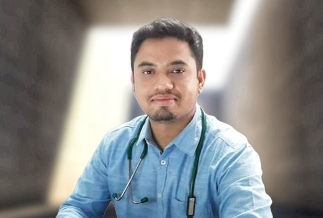
Dr. Rameez Shaikh (MBBS, MD, MIPS) is a consultant Psychiatrist, Sexologist & Psychotherapist in Nagpur and works at Mind & Mood Clinic. He believes that science-based treatment, encompassing spiritual, physical, and mental health, will provide you with the long-lasting knowledge and tool to find happiness and wholeness again.
Dr. Rameez Shaikh, a dedicated psychiatrist , is a beacon of compassion and understanding in the realm of mental health. With a genuine passion for helping others, he combines his extensive knowledge and empathetic approach to create a supportive space for his patients.