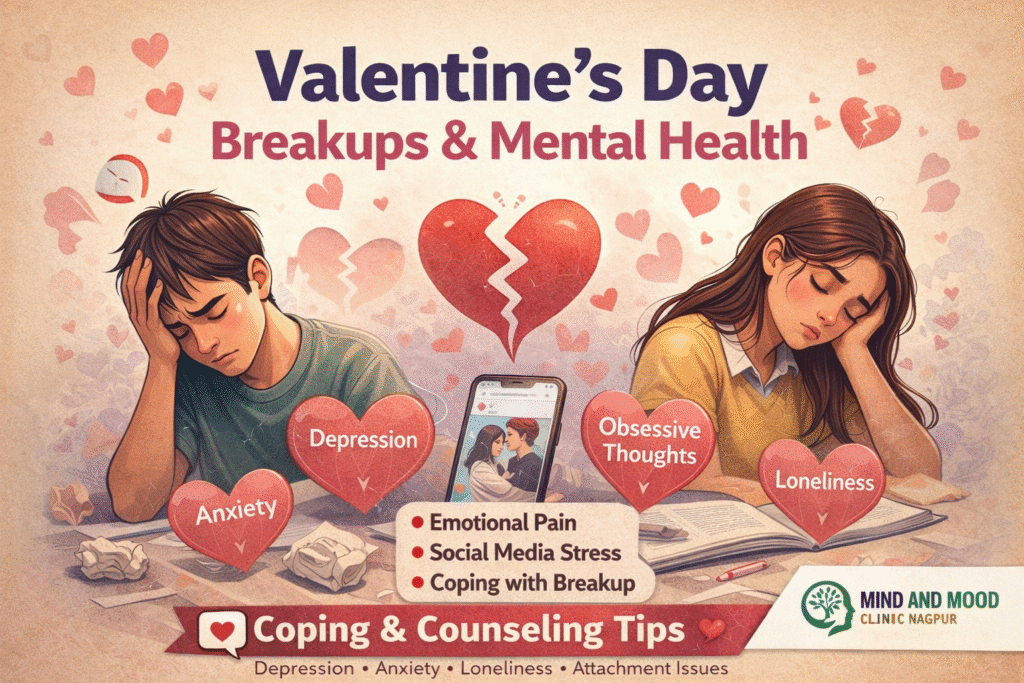
Valentine’s Day is sold as a celebration of love.
But inside clinics, helplines, and quiet bedrooms, it is also one of the most emotionally difficult days of the year—especially for young adults.
Every February, I notice a sharp rise in patients coming with:
- sudden breakups
- intense loneliness
- anxiety attacks
- depressive symptoms
- obsessive checking of an ex’s social media
Valentine’s Day doesn’t cause these problems.
It magnifies what is already fragile.
Valentine’s Day by the Numbers (What We Commonly See)
While exact figures vary, mental health research and clinical trends consistently show:
- Breakup-related distress peaks around Valentine’s week
- Young adults (18–30 years) report the highest emotional impact
- Relationship-related stress contributes to:
- ↑ anxiety symptoms
- ↑ depressive thoughts
- ↑ alcohol and substance use
- Helplines and clinics report a noticeable spike in emotional distress calls during mid-February
In simple words:
Valentine’s Day acts like an emotional spotlight—what hurts already starts hurting louder.
Why Breakups Hurt More Around Valentine’s Day
1. Forced Comparison
Social media floods people with:
- Couple photos
- Gifts, trips, surprises
- “Perfect relationship” narratives
For someone recently broken up—or already lonely—this creates:
“What’s wrong with me?” thinking
This comparison is psychologically toxic.
2. Loss Becomes Public
A breakup is private pain.
Valentine’s Day makes it public.
People start noticing:
- “Why are you alone?”
- “Didn’t you have someone?”
This increases shame, not healing.
3. Unresolved Attachment Wounds
Breakups don’t only end relationships.
They activate attachment systems in the brain.
Common thoughts:
- “I won’t find anyone again”
- “I wasn’t enough”
- “I’ve been replaced”
These are attachment-driven fears, not facts.
4. False Belief: Love = Worth
Valentine’s Day quietly pushes the idea:
“If you are loved romantically, you are valuable.”
For many, especially adolescents and young adults, this becomes:
“If I am single, I have failed.”
This belief fuels depression and low self-esteem.
Common Psychological Issues Seen After Valentine’s Day Breakups
1. Acute Stress Reaction
- Crying spells
- Chest tightness
- Racing thoughts
- Inability to focus
Often dismissed as “normal breakup pain,” but can become severe.
2. Depression (Mild to Moderate)
- Persistent sadness
- Loss of interest
- Hopelessness
- Sleep and appetite changes
Breakups are one of the most common triggers of first depressive episodes.
3. Anxiety & Panic
- Fear of being alone forever
- Obsessive thinking about the ex
- Panic attacks after seeing reminders
4. Obsessive Rumination
- Replaying conversations
- Checking last messages
- Stalking social media
This keeps the brain stuck in emotional pain.
5. Substance Use as Coping
Valentine’s week often sees:
- Increased alcohol use
- “One night” coping behaviors
- Risk-taking decisions
These delay healing and worsen mood later.
Why Some People Struggle More Than Others
Breakups hit harder if there is:
- Anxious attachment style
- Low self-worth
- Past trauma or abandonment
- Emotional dependency
- Lack of social support
It’s not about being “weak.”
It’s about how the brain learned to attach.
Common Mistakes People Make After Breakups (Especially on Valentine’s Day)
1. Forcing Positivity
“Be strong”
“Move on fast”
“Others have it worse”
This invalidates real grief.
2. Reaching Out Repeatedly
Late-night messages, “closure” talks, checking stories.
This reopens the wound repeatedly.
3. Self-Blame
“I ruined everything”
“I wasn’t enough”
Most breakups are relational mismatches, not personal failures.
4. Isolating Completely
Withdrawing from friends increases depressive symptoms.
What Actually Helps (Psychologically Proven, Practical Steps)
1. Normalize the Pain
A breakup activates the same brain circuits as physical pain.
Feeling hurt does not mean you are dramatic.
It means your brain is healing.
2. Reduce Exposure, Not Feelings
- Mute or unfollow temporarily
- Avoid Valentine’s content if needed
Healing is not avoidance—it’s emotional first aid.
3. Structure Your Day
Unstructured time increases rumination.
Simple routines protect mental health.
4. Talk to One Safe Person
You don’t need everyone’s opinion.
Just one emotionally safe listener.
5. Professional Help When Needed
Seek help if:
- Sadness lasts beyond 2–3 weeks
- Panic attacks occur
- Sleep is severely disturbed
- Thoughts become hopeless or self-critical
- Functioning drops (work, study, daily life)
How a Psychiatrist Can Help After a Breakup
A psychiatrist does not force medication.
They help by:
- Understanding attachment patterns
- Reducing anxiety and sleep issues
- Treating depression if present
- Helping the brain detach safely
- Preventing rebound relationships driven by pain
Early help often prevents long-term emotional scars.
A Message for Valentine’s Day
If you are in love—celebrate it gently.
If you are heartbroken—you are not broken.
If you are single—you are not incomplete.
Valentine’s Day is one day.
Your mental health is lifelong.
Love can end.
Your worth does not.
Written from clinical experience with individuals navigating breakups, loneliness, and emotional pain during Valentine’s season.
(This blog is for educational purposes and does not replace professional consultation.)

Dr. Rameez Shaikh (MBBS, MD, MIPS) is a consultant Psychiatrist, Sexologist & Psychotherapist in Nagpur and works at Mind & Mood Clinic. He believes that science-based treatment, encompassing spiritual, physical, and mental health, will provide you with the long-lasting knowledge and tool to find happiness and wholeness again.
Dr. Rameez Shaikh, a dedicated psychiatrist , is a beacon of compassion and understanding in the realm of mental health. With a genuine passion for helping others, he combines his extensive knowledge and empathetic approach to create a supportive space for his patients.