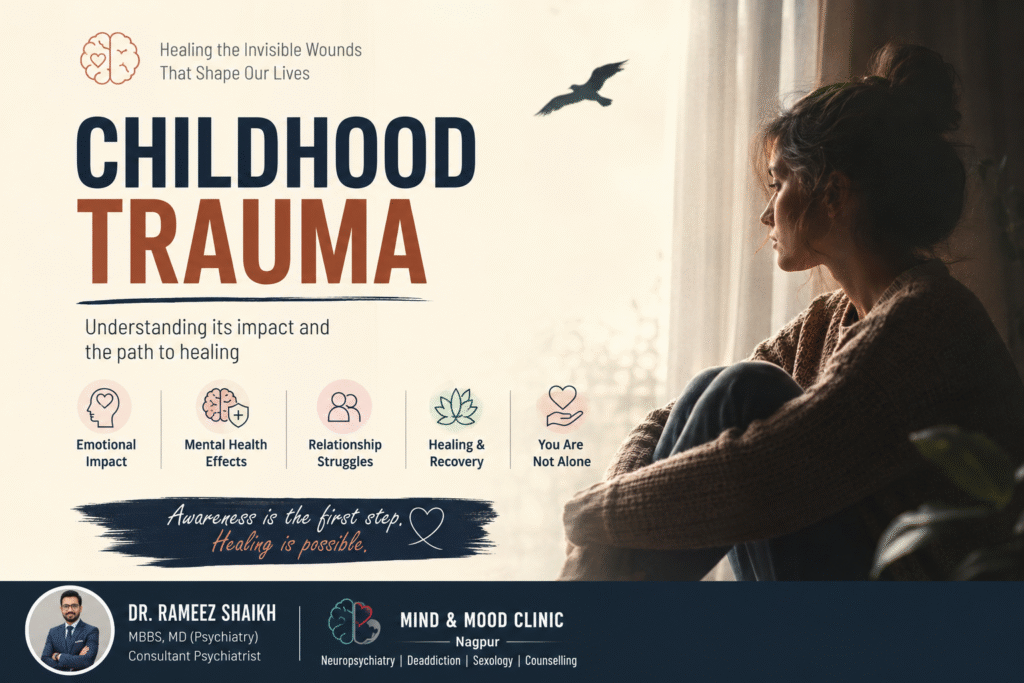
Childhood Trauma: The Pain You Never Chose but Still Carry
Many adults walk into a psychiatrist’s clinic saying:
“I don’t know why I react like this.”
“I get anxious over small things.”
“I can’t trust people.”
“I always think people will leave me.”
“I feel empty even when life is going well.”
After spending time understanding their life story, a common thread often emerges—not weakness, not lack of willpower, but childhood trauma.
Childhood trauma does not always involve physical abuse or severe violence. Sometimes, it is the silent absence of love, emotional safety, validation, or protection. These invisible wounds can shape how we think, feel, love, trust, and cope for decades.
As a psychiatrist, I have seen many people spend years treating anxiety, depression, panic attacks, OCD, relationship problems, or addiction without realizing that unresolved childhood trauma may be one of the underlying factors.
The encouraging news is that trauma is treatable. Healing is possible, and your past does not have to define your future.
What is Childhood Trauma?
Childhood trauma refers to distressing experiences occurring before the age of 18 that overwhelm a child’s ability to cope.
Trauma changes how the brain develops, how emotions are regulated, and how a child perceives safety.
Contrary to popular belief, trauma is not defined only by the event itself—it is defined by how the child experiences it.
Two children can experience the same event but have completely different emotional outcomes depending on their support system, personality, and environment.
Types of Childhood Trauma
1. Physical Abuse
Being hit, beaten, burned, or physically punished repeatedly.
2. Emotional Abuse
Constant criticism, humiliation, threats, rejection, insults, or making the child feel worthless.
Examples include:
- “You’re useless.”
- “You’ll never succeed.”
- “Why can’t you be like your brother?”
Words can leave scars that last longer than bruises.
3. Sexual Abuse
Any unwanted sexual contact, exposure, exploitation, or inappropriate behavior toward a child.
Many survivors struggle silently for years due to fear, guilt, or shame.
4. Emotional Neglect
One of the most overlooked forms of trauma.
Parents may provide food, clothing, and education but fail to provide emotional support.
The child grows up believing:
- My feelings don’t matter.
- I shouldn’t express emotions.
- Love must be earned.
5. Physical Neglect
Lack of proper food, shelter, healthcare, hygiene, or supervision.
6. Domestic Violence
Children witnessing violence between parents often experience trauma even if they are never physically harmed.
7. Loss of a Parent
Death, divorce, abandonment, imprisonment, or prolonged separation.
8. Bullying
Repeated humiliation at school or online can permanently affect self-esteem.
9. Substance Abuse in Family
Growing up with an alcoholic or addicted parent creates chronic uncertainty and fear.
10. Chronic Illness or Medical Trauma
Repeated hospitalizations or painful medical procedures can also become traumatic experiences.
What Happens Inside the Brain?
Trauma changes the developing brain.
Research shows changes in several important brain regions.
Amygdala
Becomes overactive.
The brain constantly scans for danger.
Even harmless situations may feel threatening.
Hippocampus
Memory processing becomes affected.
Traumatic memories remain emotionally intense.
Prefrontal Cortex
Decision-making, emotional regulation, concentration, and impulse control may become weaker under stress.
Stress Hormones
The body releases excessive cortisol and adrenaline.
Children remain in “survival mode.”
Over time, this affects both mental and physical health.
Adverse Childhood Experiences (ACEs)
The landmark ACE Study demonstrated that childhood adversity significantly increases the risk of adult mental and physical health problems.
Examples of ACEs include:
- Abuse
- Neglect
- Domestic violence
- Addiction in family
- Mental illness in parents
- Divorce
- Incarceration of a parent
The higher the ACE score, the greater the risk of depression, anxiety, substance use, heart disease, diabetes, obesity, and suicide.
Signs of Childhood Trauma in Adults
Many adults never realize that their present struggles are linked to childhood experiences.
Common symptoms include:
Emotional
- Anxiety
- Depression
- Panic attacks
- Emotional numbness
- Irritability
- Chronic guilt
- Shame
- Feeling “not good enough”
Relationship Problems
- Fear of abandonment
- Difficulty trusting others
- Choosing unhealthy partners
- Constant reassurance seeking
- Jealousy
- Emotional dependence
- Fear of intimacy
Behavioural Signs
- People pleasing
- Perfectionism
- Self-harm
- Anger outbursts
- Addiction
- Emotional eating
- Workaholism
- Avoidance
Physical Symptoms
Trauma often appears in the body.
Many patients experience:
- Headaches
- IBS
- Chronic pain
- Fibromyalgia
- Fatigue
- Sleep problems
- Palpitations
- Panic symptoms
Childhood Trauma and Mental Illness
Trauma increases the likelihood of developing:
- Depression
- Anxiety Disorders
- PTSD
- Complex PTSD
- OCD
- Panic Disorder
- Social Anxiety
- Borderline Personality Disorder
- Eating Disorders
- Substance Use Disorders
- Dissociative Disorders
Not everyone with trauma develops mental illness, but trauma significantly increases vulnerability.
Childhood Trauma Can Affect Success Too
Many highly successful professionals carry unresolved childhood trauma.
They may become:
- Perfectionists
- High achievers
- Constant workers
- Unable to enjoy success
- Fearful of failure
- Chronically self-critical
Outward success does not always reflect inner peace.
Trauma Can Affect Parenting
Parents who experienced trauma may unknowingly repeat unhealthy patterns.
Examples include:
- Overprotectiveness
- Emotional distance
- Harsh discipline
- Difficulty expressing affection
- Fear-based parenting
Breaking this cycle is one of the greatest gifts you can give your children.
Can Childhood Trauma Cause Memory Gaps?
Yes.
Some individuals remember every detail.
Others have fragmented memories.
Some remember almost nothing but continue experiencing emotional reactions, anxiety, nightmares, or triggers.
The brain sometimes protects itself by reducing access to overwhelming memories.
How Childhood Trauma is Diagnosed
A psychiatrist evaluates:
- Childhood experiences
- Family environment
- Emotional development
- Current symptoms
- Relationships
- Coping patterns
- Sleep
- Anxiety
- Depression
- Personality traits
Diagnosis is never based on one event alone but on the overall clinical picture.
Treatment for Childhood Trauma
Recovery is possible.
Treatment is individualized.
1. Psychiatric Assessment
Understanding the root causes instead of treating only symptoms.
2. Trauma-Focused Psychotherapy
Evidence-based therapies include:
- Trauma-Focused CBT
- Cognitive Behaviour Therapy (CBT)
- EMDR
- Schema Therapy
- Dialectical Behaviour Therapy (DBT)
- Supportive Psychotherapy
3. Medications
Medication may help when trauma leads to:
- Depression
- Severe anxiety
- Panic disorder
- PTSD symptoms
- Sleep disturbances
Medicines do not erase memories, but they can reduce distress and improve emotional stability, making therapy more effective.
4. Lifestyle Changes
Healing also includes:
- Regular sleep
- Physical exercise
- Mindfulness
- Healthy nutrition
- Building supportive relationships
- Limiting alcohol and recreational drugs
Can Childhood Trauma Be Completely Healed?
Healing does not mean forgetting what happened.
Healing means:
- The memories no longer control your life.
- Triggers become manageable.
- Relationships become healthier.
- Anxiety decreases.
- Self-worth improves.
- Life feels meaningful again.
Many people who once felt trapped by their past go on to build fulfilling, emotionally healthy lives.
When Should You Seek Professional Help?
Consider consulting a psychiatrist if you experience:
- Persistent anxiety
- Depression
- Flashbacks
- Panic attacks
- Emotional numbness
- Self-harm thoughts
- Relationship difficulties
- Nightmares
- Childhood memories causing distress
- Unexplained physical symptoms linked to stress
Early treatment can prevent long-term emotional suffering.
A Message from Dr. Rameez Shaikh
One of the most painful myths I hear is:
“It happened years ago. I should be over it by now.”
Trauma does not disappear simply because time has passed.
Children do not choose the environments they grow up in, but adults can choose to seek healing.
Recognizing the impact of childhood trauma is not about blaming parents or living in the past. It is about understanding yourself with compassion and giving yourself the opportunity to heal.
You deserve emotional safety, healthy relationships, and peace of mind.
Frequently Asked Questions (FAQs)
Can childhood trauma appear years later?
Yes. Many people develop symptoms during adulthood after stress, marriage, parenthood, or other life events trigger unresolved emotions.
Can childhood trauma cause anxiety?
Yes. Childhood trauma can increase the risk of generalized anxiety disorder, panic disorder, health anxiety, social anxiety, and PTSD.
Is emotional neglect considered trauma?
Yes. Emotional neglect is one of the most common yet underrecognized forms of childhood trauma.
Can childhood trauma affect physical health?
Yes. Trauma is associated with chronic pain, heart disease, obesity, diabetes, sleep disorders, and gastrointestinal conditions.
Can childhood trauma be treated?
Yes. Evidence-based psychotherapy, psychiatric treatment when needed, supportive relationships, and healthy coping strategies can significantly improve quality of life.
Conclusion
Childhood trauma is often invisible, but its effects can echo across a lifetime. Anxiety, depression, low self-esteem, unstable relationships, perfectionism, addiction, and even physical illnesses may sometimes be rooted in experiences from early life.
Healing begins when these experiences are acknowledged rather than ignored. With timely psychiatric evaluation, evidence-based therapy, and compassionate support, recovery is possible. No matter how difficult your past has been, it does not have to dictate your future.
If you or someone you love is struggling with the emotional impact of childhood trauma, seeking professional help can be the first step toward lasting healing.
Author: Dr. Rameez Shaikh, MBBS, MD (Psychiatry)
Consultant Psychiatrist | Mind & Mood Clinic, Nagpur
www.hellomind.in

Dr. Rameez Shaikh (MBBS, MD, MIPS) is a consultant Psychiatrist, Sexologist & Psychotherapist in Nagpur and works at Mind & Mood Clinic. He believes that science-based treatment, encompassing spiritual, physical, and mental health, will provide you with the long-lasting knowledge and tool to find happiness and wholeness again.
Dr. Rameez Shaikh, a dedicated psychiatrist , is a beacon of compassion and understanding in the realm of mental health. With a genuine passion for helping others, he combines his extensive knowledge and empathetic approach to create a supportive space for his patients.