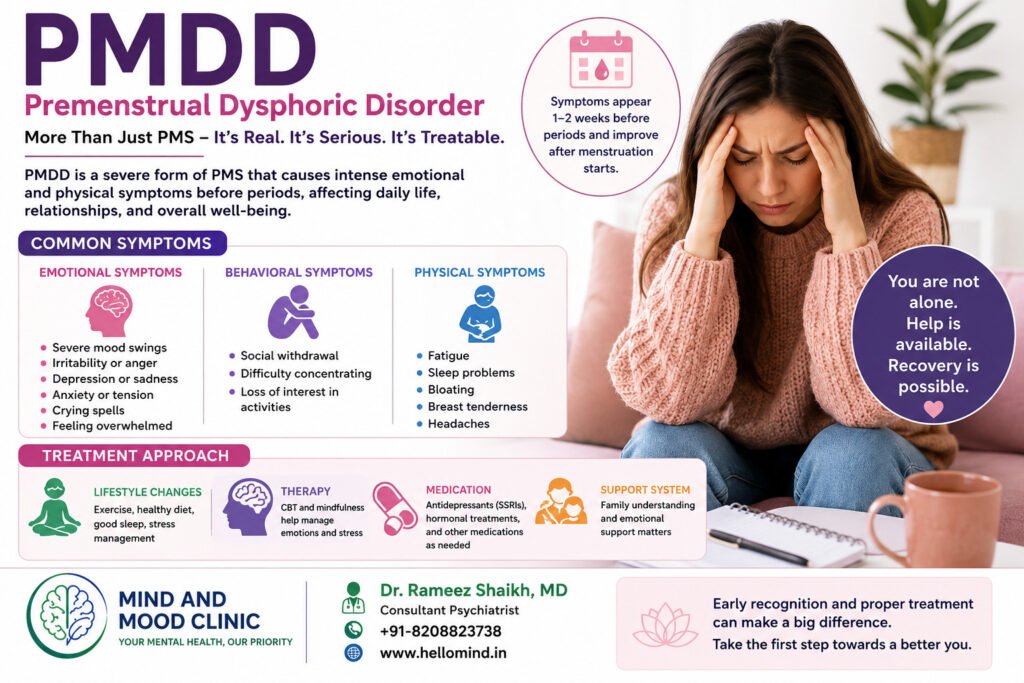
What is PMDD?
Premenstrual Dysphoric Disorder (PMDD) is a severe form of premenstrual syndrome (PMS) that causes intense emotional and physical symptoms before periods.
👉 It is not just “mood swings.”
👉 It can significantly affect daily life, relationships, and functioning.
What are the symptoms of PMDD?
PMDD symptoms usually appear 1–2 weeks before periods and improve after menstruation starts.
Emotional symptoms
- Severe mood swings
- Irritability or anger
- Depression or hopelessness
- Anxiety or tension
- Feeling overwhelmed
- Crying spells
Behavioral symptoms
- Social withdrawal
- Difficulty concentrating
- Loss of interest in activities
Physical symptoms
- Fatigue
- Sleep problems
- Bloating
- Breast tenderness
- Headaches
PMDD vs PMS: What is the difference?
| Feature | PMS | PMDD |
|---|---|---|
| Severity | Mild to moderate | Severe |
| Emotional impact | Manageable | Disabling |
| Effect on life | Minimal | Significant impairment |
| Need for treatment | Not always | Usually required |
A Real-Life Example
A 28-year-old working woman said:
“Every month, for 10 days, I feel like a different person. I get angry at small things, cry without reason, and feel like quitting my job. Then suddenly after my period, I feel normal again.”
This pattern repeated every month.
This is a classic presentation of PMDD.
What causes PMDD?
PMDD is not just hormonal imbalance.
It is due to increased sensitivity to normal hormonal changes, especially:
- Estrogen
- Progesterone
Other contributing factors:
- Genetics
- Stress
- History of depression or anxiety
- Brain chemical changes (serotonin imbalance)
Who is at risk?
- Women with past depression or anxiety
- High stress levels
- Family history of mood disorders
- Poor sleep and lifestyle habits
How is PMDD diagnosed?
There is no single test.
Diagnosis is based on:
- Symptom tracking for at least 2 menstrual cycles
- Symptoms occurring before periods
- Relief after menstruation
- Impact on daily functioning
How to manage PMDD?
1. Lifestyle changes
- Regular exercise
- Balanced diet
- Good sleep routine
- Reduce caffeine and sugar
2. Psychological therapies
Cognitive Behavioral Therapy (CBT)
- Helps manage negative thoughts
- Improves emotional control
Mindfulness
- Reduces emotional reactivity
- Improves awareness
3. Medications
- SSRIs (antidepressants)
- Hormonal treatments (in some cases)
- Anti-anxiety medications
👉 Treatment depends on severity.
Practical tips for patients
- Track your symptoms monthly
- Plan important tasks outside difficult days
- Inform close family members
- Practice relaxation techniques
When should you see a psychiatrist?
Seek help if:
- Symptoms are severe
- You feel out of control
- It affects work or relationships
- You have thoughts of self-harm
Final Thoughts
PMDD is real.
It is treatable.
And you are not alone.
👉 With the right treatment, symptoms can improve significantly.
Contact Information
📍 Mind and Mood Clinic, Sadar, Nagpur
👨⚕️ Dr. Rameez Shaikh, MD
📞 +91-8208823738
🌐 www.hellomind.in
Disclaimer
This article is for educational purposes only. Please consult a qualified psychiatrist for proper diagnosis and treatment.

Dr. Rameez Shaikh (MBBS, MD, MIPS) is a consultant Psychiatrist, Sexologist & Psychotherapist in Nagpur and works at Mind & Mood Clinic. He believes that science-based treatment, encompassing spiritual, physical, and mental health, will provide you with the long-lasting knowledge and tool to find happiness and wholeness again.
Dr. Rameez Shaikh, a dedicated psychiatrist , is a beacon of compassion and understanding in the realm of mental health. With a genuine passion for helping others, he combines his extensive knowledge and empathetic approach to create a supportive space for his patients.