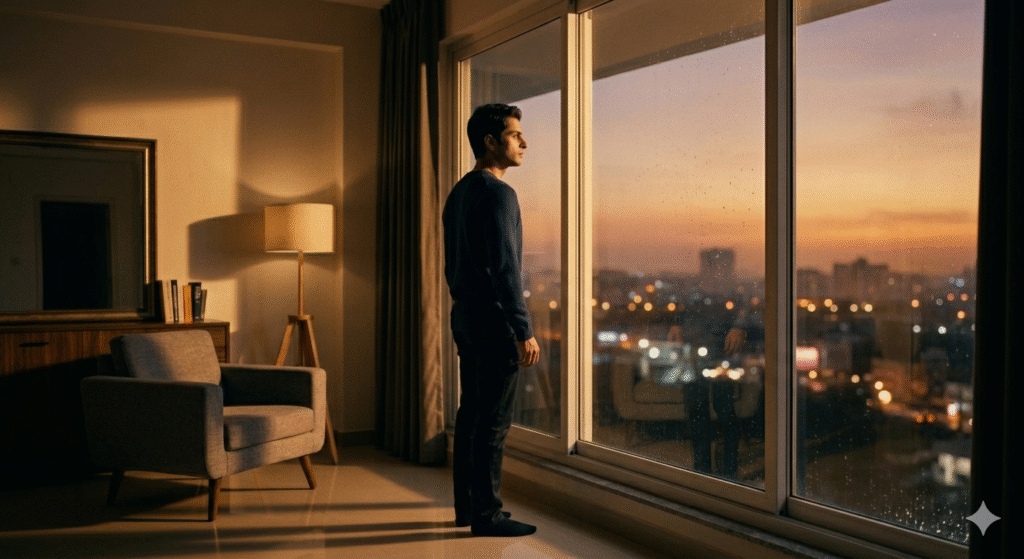
There’s a quiet misconception we often carry as a society:
If an adult has no close friends, something must be wrong.
They must be antisocial.
Difficult.
Unlikable.
But psychology tells a very different—and far more human—story.
Sometimes, distance isn’t about disinterest.
It’s about protection.
Where Does This Pattern Begin?
To understand adult relationships, we often have to go back—far back—into childhood.
This is where the foundation of emotional safety is built.
In psychology, we call this Attachment Theory—the idea that early relationships with caregivers shape how we connect with others for the rest of our lives.
When a child grows up in an environment where:
- Emotions are dismissed
- Vulnerability is punished
- Trust is broken
- Affection is inconsistent
They learn something powerful, and often painful:
“It’s not safe to open up.”
The Invisible Rule They Carry Into Adulthood
Children are incredibly adaptive.
They don’t think, “My environment is unhealthy.”
They think, “I need to adjust to survive.”
So they create internal rules like:
- “Don’t trust too easily.”
- “Don’t depend on anyone.”
- “Don’t show too much emotion.”
These rules work in childhood.
They protect the child.
But in adulthood… they can quietly isolate the person.
This Isn’t Antisocial Behavior—It’s Self-Protection
Many adults who don’t have close friendships are not avoiding people because they dislike them.
They are avoiding risk.
Because to them:
- Vulnerability = rejection
- Closeness = eventual hurt
- Trust = something that can be broken
So they keep relationships at a safe distance.
Polite. Functional. Surface-level.
But rarely… deeply emotional.
The Emotional Cost of Staying Guarded
While this protective pattern makes sense, it comes with a quiet cost.
Over time, individuals may experience:
- Loneliness, even in social settings
- A sense of disconnection
- Difficulty asking for help
- Emotional fatigue from always “holding it together”
And sometimes, a confusing contradiction:
“I want closeness… but I don’t feel safe enough to have it.”
The Role of Avoidant Attachment
Many of these patterns align with what we call Avoidant Attachment.
People with this style often:
- Value independence strongly
- Struggle with emotional intimacy
- Feel uncomfortable relying on others
- Downplay their own emotional needs
Not because they don’t have needs…
But because they learned early on that those needs wouldn’t be met safely.
Important Truth: This Is Not a Personality Flaw
It’s easy to label such individuals as “cold” or “distant.”
But that misses the deeper truth:
This is not who they are.
It’s what they learned.
And what is learned… can be unlearned.
Can This Change? Absolutely—But Gently
Healing this pattern doesn’t happen by forcing yourself to suddenly “open up.”
That often backfires.
Instead, it begins with:
- Recognizing your patterns without judgment
- Understanding where they came from
- Allowing small, safe moments of vulnerability
- Building trust slowly—with the right people
In therapy, we don’t push vulnerability.
We create safety first.
Because vulnerability without safety feels like danger.
But vulnerability with safety feels like connection.
A Personal Reflection
Many of the individuals I’ve worked with are not lacking social skills.
They are thoughtful, intelligent, emotionally aware.
But they carry a quiet belief:
“If I let people get too close, I might get hurt again.”
And honestly… given their past, that belief makes sense.
Conclusion: Distance Is Not Disinterest—It’s History
So the next time we see someone who keeps to themselves, it may help to pause before labeling.
They may not be antisocial.
They may not be unlikable.
They may simply be someone who learned, very early in life, that:
Closeness can hurt.
And until that belief feels safe to challenge, distance becomes their way of staying okay.
As a psychiatrist, I believe this deeply:
Behind emotional distance, there is often a story—not of rejection… but of protection.
And sometimes, the most healing thing we can offer—
to others, and to ourselves—
is not judgment…
But understanding.
Disclaimer
This article is for educational and awareness purposes only and does not substitute professional mental health advice. If you are struggling with loneliness or relationship difficulties, please consult a qualified mental health professional.
Dr. Rameez Shaikh, MD
Psychiatrist & Counsellor
Mind & Mood Clinic
🌐 www.hellomind.in
📞 +91-8208823738

Dr. Rameez Shaikh (MBBS, MD, MIPS) is a consultant Psychiatrist, Sexologist & Psychotherapist in Nagpur and works at Mind & Mood Clinic. He believes that science-based treatment, encompassing spiritual, physical, and mental health, will provide you with the long-lasting knowledge and tool to find happiness and wholeness again.
Dr. Rameez Shaikh, a dedicated psychiatrist , is a beacon of compassion and understanding in the realm of mental health. With a genuine passion for helping others, he combines his extensive knowledge and empathetic approach to create a supportive space for his patients.