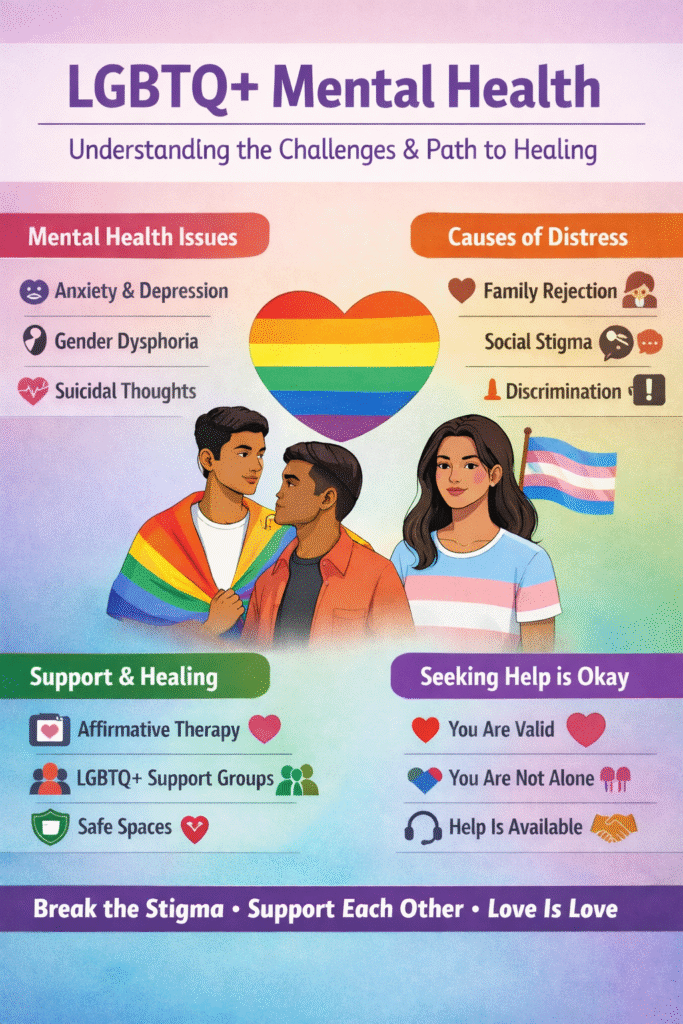
Mental health is important for everyone. However, gay, lesbian, bisexual, and transgender (LGBTQ+) individuals often face unique psychological challenges due to social stigma, discrimination, rejection, and identity struggles.
In India and across the world, awareness is improving. Yet many individuals still suffer silently.
This article explores:
- Why LGBTQ+ mental health needs special attention
- Common psychological concerns
- Risk factors
- Protective factors
- How families and society can help
- When to seek professional support
🌈 Why LGBTQ+ Mental Health Is Different
Being LGBTQ+ is not a mental illness.
However, living in a society that may not fully accept one’s identity creates chronic stress. This is known as Minority Stress.
Minority stress includes:
- Fear of rejection
- Social discrimination
- Bullying
- Family pressure
- Internalized shame
- Legal and cultural stigma
Over time, this constant stress affects emotional well-being.
🧠 Common Mental Health Concerns in LGBTQ+ Individuals
1️⃣ Anxiety Disorders
- Social anxiety
- Fear of being judged
- Hypervigilance in public spaces
- Panic attacks
2️⃣ Depression
- Feelings of isolation
- Low self-worth
- Hopelessness
- Loss of interest in activities
3️⃣ Suicidal Thoughts
Research globally shows higher suicidal ideation among LGBTQ+ youth, especially when family rejection is present.
4️⃣ Substance Use
Some individuals turn to alcohol or drugs to cope with emotional pain.
5️⃣ Body Image & Gender Dysphoria
- Especially common in transgender individuals
- Discomfort with physical body
- Social misgendering increases distress
💔 The Role of Family Rejection
In India, family plays a central role in emotional development.
When parents respond with:
- Denial
- Anger
- Threats
- Emotional withdrawal
It significantly increases:
- Depression risk
- Self-harm behavior
- Runaway behavior
On the other hand, even partial family acceptance dramatically reduces suicide risk.
🏫 School & Workplace Challenges
- Bullying
- Mockery
- Exclusion
- Discrimination in promotions
- Fear of coming out
Many individuals live double lives, leading to chronic emotional exhaustion.
🧬 Internalized Homophobia & Shame
Sometimes the biggest struggle is internal.
If a person grows up hearing:
- “This is wrong”
- “This is abnormal”
- “This is sinful”
They may begin to believe it about themselves.
This creates:
- Self-hatred
- Guilt
- Relationship difficulties
- Fear of intimacy
Therapy helps in unlearning these harmful beliefs.
🏳️⚧️ Transgender Mental Health
Transgender individuals often face:
- Misgendering
- Social violence
- Employment discrimination
- Healthcare barriers
Gender dysphoria can cause:
- Severe anxiety
- Depression
- Suicidal thoughts
Affirmative support, hormone therapy (when appropriate), and social validation significantly improve mental health outcomes.
🛡️ Protective Factors That Improve Mental Health
- Supportive family
- Affirming friends
- LGBTQ+ support groups
- Access to mental health care
- Positive role models
- Safe spaces
Even one accepting adult can make a life-saving difference for a young person.
🧘 Therapy for LGBTQ+ Individuals
Affirmative therapy focuses on:
- Identity acceptance
- Coping with stigma
- Building self-esteem
- Healing trauma
- Relationship skills
- Family counseling
It is important that therapy:
❌ Does NOT try to change sexual orientation
❌ Does NOT promote shame
❌ Does NOT encourage suppression
Conversion therapy is unethical and harmful.
❤️ If You Are LGBTQ+ and Struggling
Remember:
- You are not broken.
- Your identity is valid.
- Your feelings are understandable.
- Support exists.
- Healing is possible.
Seeking therapy is not weakness. It is strength.
👨👩👧👦 For Parents Reading This
If your child comes out:
Pause before reacting.
What they need most is:
- Safety
- Listening
- Reassurance of love
Even if you feel confused, avoid harsh words. They can leave deep psychological scars.
You do not have to understand everything immediately. Just start with acceptance.
🌍 Indian Context: Progress & Challenges
India has made progress legally. However:
- Social stigma persists.
- Rural areas have less awareness.
- Mental health access remains limited.
We need more:
- Education
- Safe school policies
- Workplace inclusion
- Family awareness programs
🔎 When to Seek Professional Help
Seek help if there are:
- Persistent sadness
- Panic attacks
- Self-harm thoughts
- Severe gender dysphoria
- Substance dependence
- Family conflict
Early intervention prevents long-term suffering.
🌈 Final Message
Mental health in LGBTQ+ communities is not about identity being “the problem.”
The real problem is stigma, discrimination, and silence.
When acceptance increases, mental health improves.
Compassion, awareness, and professional support can change lives.
Dr. Rameez Shaikh (MBBS, MD, MIPS) is a consultant Psychiatrist, Sexologist & Psychotherapist in Nagpur and works at Mind & Mood Clinic. He believes that science-based treatment, encompassing spiritual, physical, and mental health, will provide you with the long-lasting knowledge and tool to find happiness and wholeness again.
Dr. Rameez Shaikh, a dedicated psychiatrist , is a beacon of compassion and understanding in the realm of mental health. With a genuine passion for helping others, he combines his extensive knowledge and empathetic approach to create a supportive space for his patients.