
New Year Anxiety, Comparison, Resolutions & Substance Use – An Honest Mental Health Conversation
Every January, I hear the same sentence in my clinic.
“Doctor, sab log aage badh rahe hain… main hi peeche reh gaya hoon.”
The New Year brings fireworks, reels, and resolutions.
But for many Indians, it also brings quiet anxiety, self-doubt, and increased substance use.
Why the New Year Triggers Anxiety
The New Year forces a mental comparison report card:
- Career progress
- Marriage pressure
- Financial stability
- Body image
- Social status
Example:
Rohit, 32, software engineer from Pune, told me:
“My college friends are buying flats and posting foreign trips. I’m still renting and switching jobs. January makes me panic.”
In Indian society, milestones are often socially measured, not personally defined.
This makes New Year anxiety sharper and more persistent.
Comparison Culture: Social Media vs Real Life
January is peak comparison season:
- “New job, new me”
- “Finally married”
- “Best year loading”
- Gym check-ins and weight-loss posts
Example:
Anjali, 28, MBA graduate from Nagpur, said:
“Instagram dekh ke lagta hai main kuch bhi achieve nahi kar rahi. Even my cousins look sorted.”
What we forget:
- Social media shows results, not struggles
- No one posts therapy, debt, loneliness, or relapses
- Progress is non-linear, especially for mental health
Comparison doesn’t motivate everyone.
For anxious minds, it paralyzes.
New Year Resolutions: When Motivation Turns into Pressure
Most resolutions fail not due to laziness, but because they’re emotionally unrealistic.
Common Indian resolutions:
- “This year I must get married”
- “I will quit drinking completely”
- “I will lose 15 kilos”
- “I must crack this exam at any cost”
Example:
Sameer, 35, businessman, shared:
“By January 10, I already felt guilty. I missed gym for three days and thought—ab kya fayda?”
Psychologically, this is all-or-nothing thinking:
- Either perfect or useless
- Either success or failure
Mental health improves with consistency, not intensity.
Substance Use During the New Year: The Silent Escape
New Year parties normalize excess:
- Alcohol becomes “social bonding”
- Smoking becomes stress relief
- Cannabis becomes “relaxation”
But for many, substance use isn’t celebration — it’s self-medication.
Example:
Neha, 30, working professional, said:
“I drink more in January. It helps me forget where I’m lagging.”
The problem:
- Alcohol worsens anxiety after the buzz fades
- Sleep quality drops
- Motivation reduces
- Anxiety rebounds stronger
Substances borrow relief from tomorrow.
How These Four Factors Create a Mental Health Loop
Here’s what often happens:
- New Year reflection → anxiety
- Social comparison → self-doubt
- Unrealistic resolutions → pressure
- Substance use → temporary escape
- Guilt + anxiety → relapse of the cycle
This isn’t weakness.
It’s how the human brain reacts to pressure.
A Healthier Indian Mindset for the New Year
Instead of asking:
“Is saal meri life change ho jayegi kya?”
Ask:
- “What one thing can I do consistently?”
- “What am I being unnecessarily harsh about?”
- “What support do I need?”
Better alternatives to resolutions:
- “I’ll walk 15 minutes daily” instead of “I’ll get fit”
- “I’ll reduce drinking” instead of “I’ll quit forever”
- “I’ll focus on sleep” instead of “I’ll fix everything”
Change doesn’t need January.
But January needs gentler expectations.
When to Seek Help
Consider professional help if:
- Anxiety peaks every January
- Comparison thoughts don’t stop
- Substance use feels difficult to control
- Sleep, appetite, or mood are disturbed
- You feel stuck despite trying
Mental health support is not a luxury.
It’s maintenance — like BP or sugar control.
Final Thought from the Clinic
The New Year doesn’t ask you to reinvent yourself.
It asks you to survive gently and grow slowly.
You are not late.
You are not behind.
You are living your timeline.
Disclaimer
This article is for educational purposes only and does not substitute professional psychiatric consultation. If you are experiencing distress, anxiety, or substance-related concerns, please consult a qualified mental health professional.
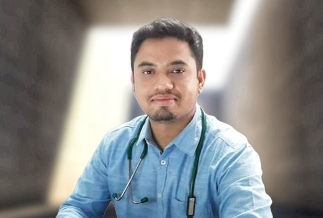
Dr. Rameez Shaikh (MBBS, MD, MIPS) is a consultant Psychiatrist, Sexologist & Psychotherapist in Nagpur and works at Mind & Mood Clinic. He believes that science-based treatment, encompassing spiritual, physical, and mental health, will provide you with the long-lasting knowledge and tool to find happiness and wholeness again.
Dr. Rameez Shaikh, a dedicated psychiatrist , is a beacon of compassion and understanding in the realm of mental health. With a genuine passion for helping others, he combines his extensive knowledge and empathetic approach to create a supportive space for his patients.